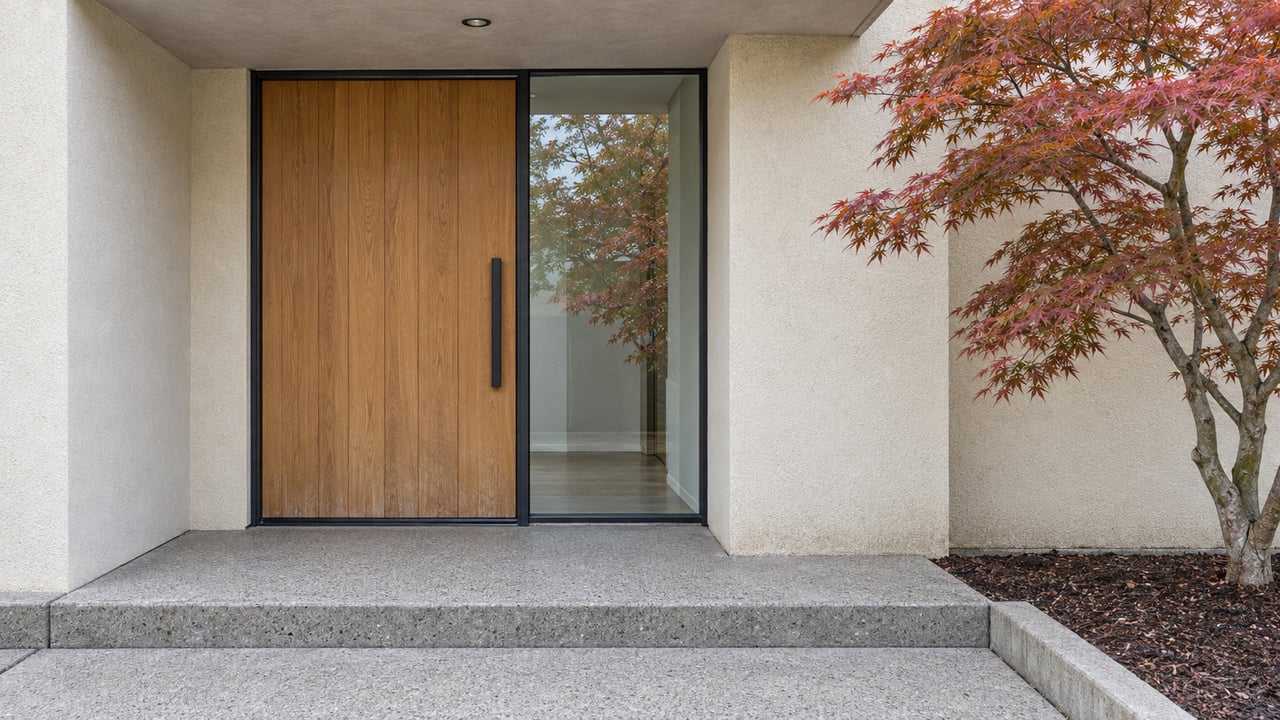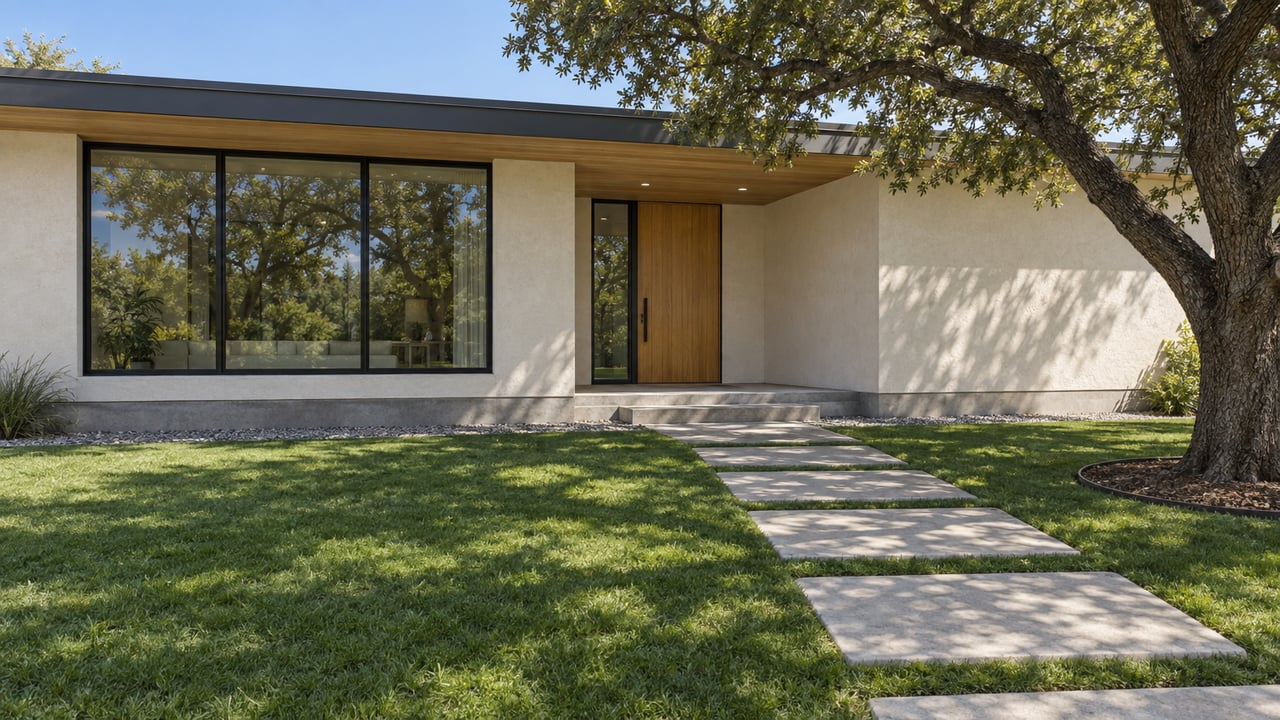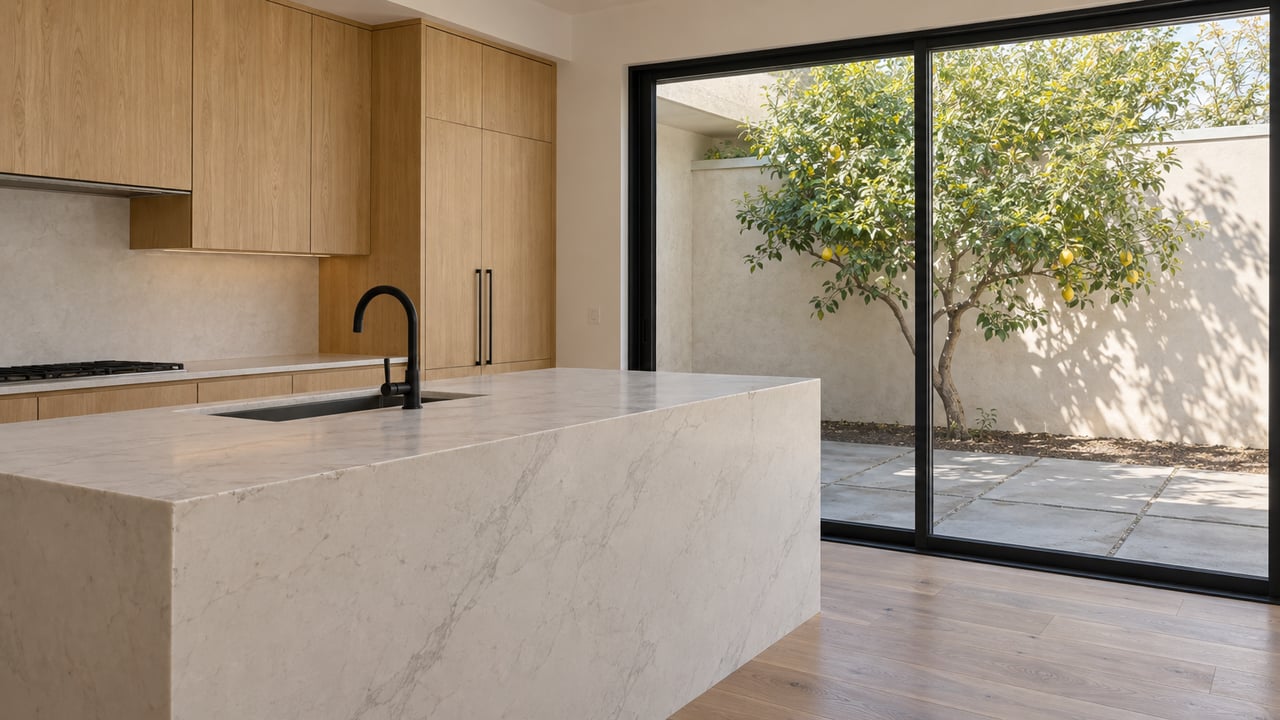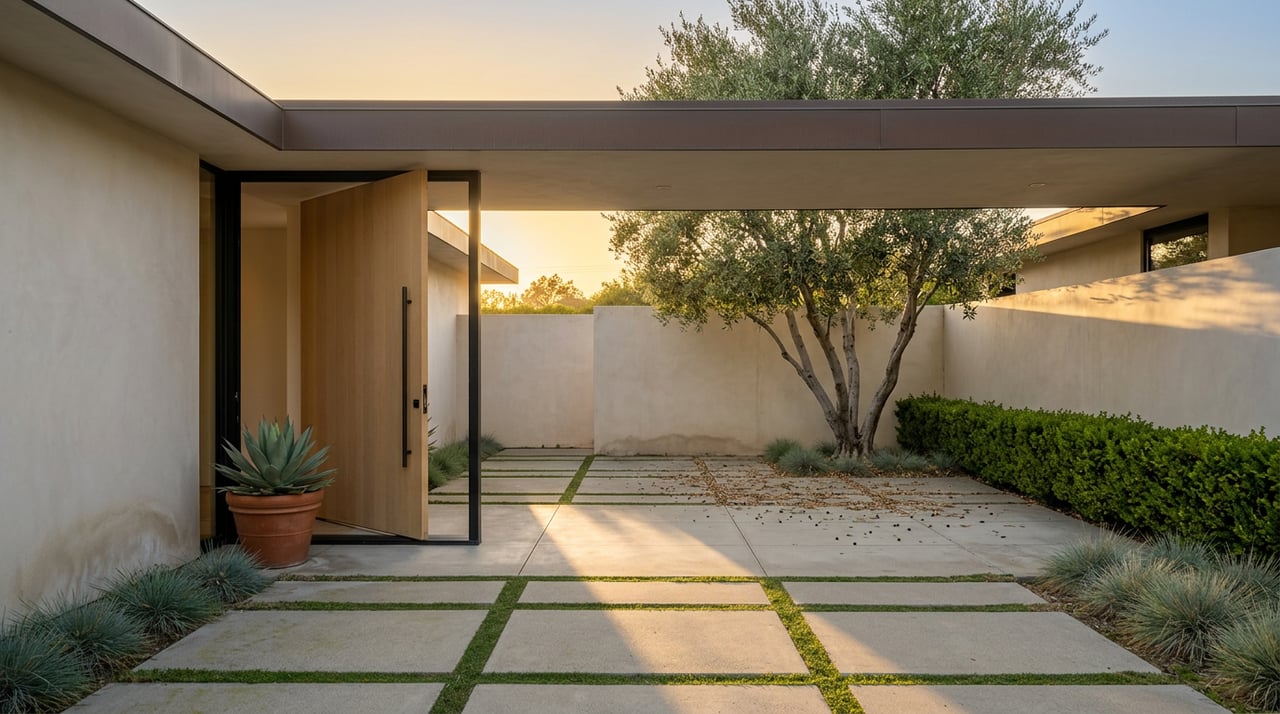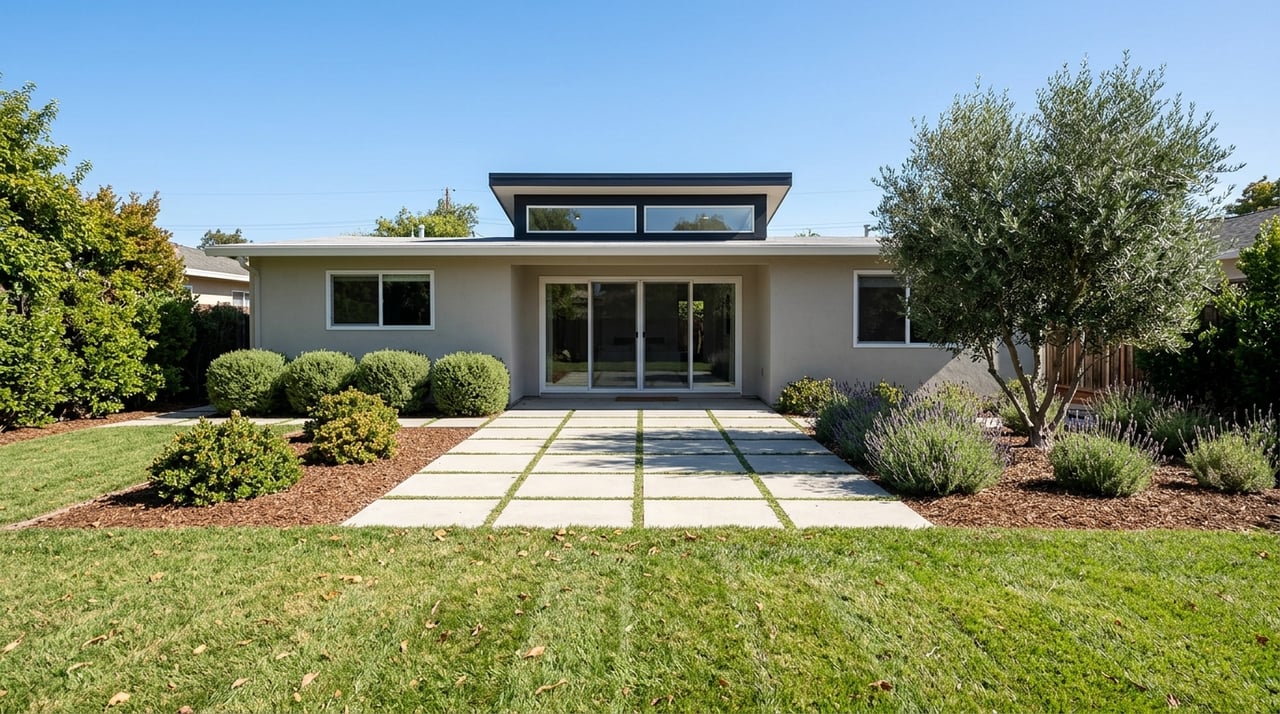
Two listings, same afternoon, two blocks apart. One is a 1962 ranch with original cabinets and a roof that's due. The other is a similar-sized Eichler with a redone kitchen and a new HVAC system. On paper, the updated home should command a real premium per square foot. In Cupertino, it often doesn't, because the number that decides the price isn't sitting inside either house. It's sitting underneath it.
That's the piece of the Cupertino market that gets lost in the median-price headlines. The city's home prices are genuinely extraordinary, with a three-month median sale price of $3.2 million through June 2026, up 8.4 percent from the same period a year earlier. But that median blends two products that behave nothing alike: land with a house on it, and a housing unit with no land underneath. Understanding which one you're actually shopping for changes what you should be evaluating before you write an offer.
The Gap That Price-Per-Square-Foot Can't Explain
Look at how differently the two segments of the Cupertino market actually trade. MLSListings data compiled in April 2026, the multiple listing service used by nearly all licensed agents in Silicon Valley, shows this split plainly.
| Segment | Median Sale Price | Median Days on Market | Sale-to-List Ratio | Months of Inventory |
|---|---|---|---|---|
| Single-family homes | $3.68M | 8 days | 109% | 1.6 months |
| Attached homes (condos/townhomes) | $1.16M | 3 days | 102% | 8.6 months |
Read past the headline gap in price and the stranger detail is in the last two columns. Attached homes actually go pending faster than single-family homes once a buyer commits, just 3 days versus 8. But the segment as a whole carries 8.6 months of inventory, more than five times the single-family figure. Fewer buyers are competing for the attached product even though it costs a third as much.
That's not a story about condo quality. It's a story about what buyers believe they're purchasing. A single-family lot in Cupertino comes with land and a spot in a specific school attendance boundary. Buyers are bidding up the land, not the walls, and the inventory numbers show it: everyone wants in on the scarce product, and almost no one is fighting over the other one.
Why the House on Top Barely Moves the Price
The reason the structure matters so little to Cupertino's pricing is that most of the structures aren't worth much to begin with. Much of the city's detached housing stock dates to the 1960s through the 1980s, a mix of ranch homes and Eichler-style builds in the 1,200 to 2,500 square foot range. These homes were well built for their era, but decades of deferred systems, layouts, and finishes mean a full renovation now routinely lands in the same range as new construction. Once a whole-home remodel budget starts approaching 60 to 70 percent of what a ground-up rebuild would cost, the math stops favoring the remodel.
That threshold is why so many Cupertino transactions quietly function as land purchases with a disposable structure attached. The buyer isn't paying for the kitchen. The focus is on the lot, and the seller's asking price reflects that reality whether or not either party says it out loud.
The listing price on a Cupertino single-family home is less a statement about the house and more a statement about what the city will let you build in its place.
The Real Product You're Buying: The Zoning Envelope
If the land is the product, the zoning code is the fine print, and Cupertino's fine print is more layered than a single R1 designation suggests. The city's single-family zoning framework, laid out in Chapter 19.28 of the municipal code, includes multiple R1 sub-districts with different rules for setbacks, floor area, and design review, including a distinct R1-e designation covering the city's Eichler districts. A home in one of those districts isn't just old. It's governed by a different rulebook than the ranch three streets over.
A few specifics worth checking on any parcel before you assume teardown potential:
- Combined side setbacks matter more than most buyers expect. If a two-story addition or new build has combined side setbacks totaling less than 30 feet, Ritz Builders says the project triggers Cupertino's residential design review, adding both time and scrutiny to the approval.
- Height is measured from natural grade, not the pad you plan to build on. In the city's RHS zoning district, the maximum height of 30 feet is calculated from existing natural grade, and the permitted square footage itself is calculated from net lot area and average parcel slope, not the lot's raw acreage.
- Trees can dictate the foundation footprint. A recent demolition permit for a property on Estates Drive, documented by BuildZoom, included a specific instruction that trees shown to remain must be protected during grading and construction, a clause that can quietly determine where a new structure is allowed to sit.
- Privacy planting can be mandatory, not optional. Cupertino's planning rules require privacy screening for certain second-story windows and decks, and that requirement can only be waived with a signed consent form from the affected neighbor.
None of this shows up in a listing photo. All of it shows up in the feasibility study a buyer should be running before assuming a lot's rebuild potential matches its asking price.
One Local Proof Point
This isn't a theoretical exercise. Ritz Builders, a design-build firm headquartered on Homestead Road in Cupertino, completed a project called the Rivera House that went on to win three 2025-2026 Americas Property Awards, for Architecture Single Residence, Residential Property Development, and Residential Interior in California, judged by an independent panel of industry experts through the International Property Awards program. The firm's own description of the Cupertino process is consistent with what the zoning code says: site feasibility, R1 sub-district confirmation, tree constraints, and design review exposure all get evaluated before a design is drawn, because in this city the lot decides what's buildable long before the architect does.
That's the version of Cupertino buying that actually pays off, a lot purchased with a clear-eyed read on its zoning envelope, not a structure purchased on the hope that its finishes justify the price.
What to Verify Before You Write an Offer
- Confirm the parcel's exact R1 sub-district and whether it falls inside an Eichler overlay, a one-story overlay, or a standard R1 zone. These carry different floor area and design rules.
- Calculate net lot area and average slope, not just the lot size on the listing sheet. That's the number the city actually uses to calculate your maximum buildable square footage.
- Ask whether any two-story plans on the lot would trigger design review under the 30-foot combined setback threshold.
- Identify any heritage or protected trees on the property before assuming a footprint. Their root zones can restrict foundation placement.
- Budget for permitting time separately from construction time. Cupertino's current plan review runs 20 to 30 business days for the initial pass, plus another 10 to 20 business days for each subsequent review round.
A Few Questions Worth Asking Directly
Does a bigger house always mean a smaller gap between price and land value? Not necessarily. Size alone doesn't override the zoning envelope. A larger existing structure on a lot with tight setbacks or heritage trees may have less real rebuild room than a smaller house on a cleaner parcel.
Is renovation ever the smarter move here? Yes, when the existing structure's foundation, framing, and systems are genuinely sound and the layout works for how you'll live. The math only favors a teardown once renovation costs climb into new-construction territory.
Where do I find my property's exact zoning designation? The city's Community Development Planning Division maintains the zoning map and can confirm a parcel's R1 sub-district, and Chapter 19.28 of the Cupertino Municipal Code lays out the specific development standards for each one.
Cupertino's price tags will keep looking irrational if you read them as a verdict on the house. Read them as a verdict on the lot, and the market starts making a different kind of sense.
If you're weighing a Cupertino purchase and want help reading a specific lot's real potential, or figuring out what a property's zoning envelope actually allows before you compete for it, Anita Salas can walk through the numbers with you. Request your free Net-Proceeds & Capital-Gains consultation to start the conversation.
This article is general information, not legal, tax or financial advice. Consult a qualified professional about your situation.